Card centering examples: 55/45, 60/40 and front vs back
Centering Lab · Published and updated:
What does 55/45 or 60/40 centering actually look like? These original diagrams show the border widths at their exact ratios. They work as Pokémon centering examples without copying card artwork, and the same geometry applies to other cards with a continuous measurable frame.
Left/right and top/bottom are evaluated separately; the worse axis matters. Each drawing uses the same ratio on both axes so its table is unambiguous. The wider borders are left and top; mirroring the card does not change the result. Percentage labels refer to a pair of opposing borders, not to the full card width. The schematic outline uses the tool's standard aspect ratio, not a promise about every printed frame.
Each table is calculated from the grading model and includes the band's evidence status. Back examples are reverse-only ceilings, not a combined front/back grade. SGC has no numerical reverse model. For the formula, read ratios explained; for the source limitations, use the standards hub.
What does 50/50 front centering look like?
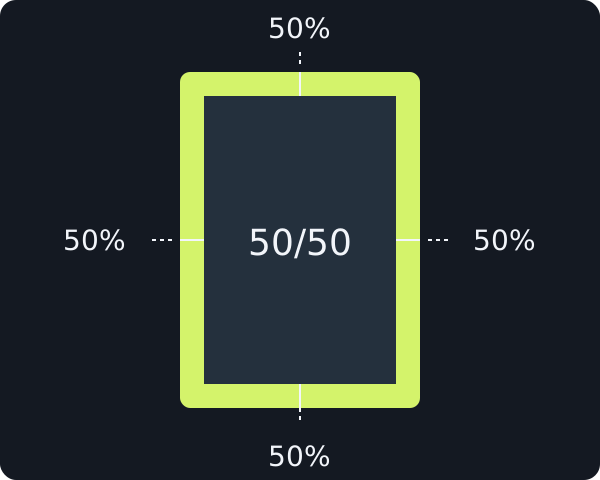
| House and grade | Status |
|---|---|
| PSA 10 GEM MT | official |
| BGS 10 Pristine | interpreted |
| CGC 10 Pristine | interpreted |
| SGC 10 Pristine | approximate |
Bands are intentionally incomplete where numerical evidence is missing. Do not interpolate unlisted grades. Status applies to each row, not just to the house.
Opposing margins are equal on each axis. A perfectly centered frame does not prove perfect surface or corners. Pristine results in the table follow the model's interpreted or approximate convention, not a guaranteed special label.
What does a 55/45 centering example show?
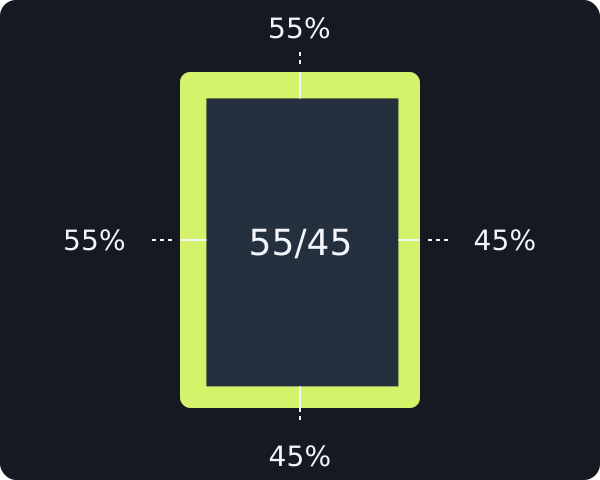
| House and grade | Status |
|---|---|
| PSA 10 GEM MT | official |
| BGS 9 Mint | interpreted |
| CGC 10 Gem Mint | official |
| SGC 10 Gem Mint | approximate |
Bands are intentionally incomplete where numerical evidence is missing. Do not interpolate unlisted grades. Status applies to each row, not just to the house.
The difference is subtle, but the wider border is not merely five percent wider than the other: the two portions add to the whole border pair. For BGS, improving just the other axis can change the ceiling; this drawing deliberately keeps both at 55/45.
What does 60/40 centering look like, and is it PSA 10?
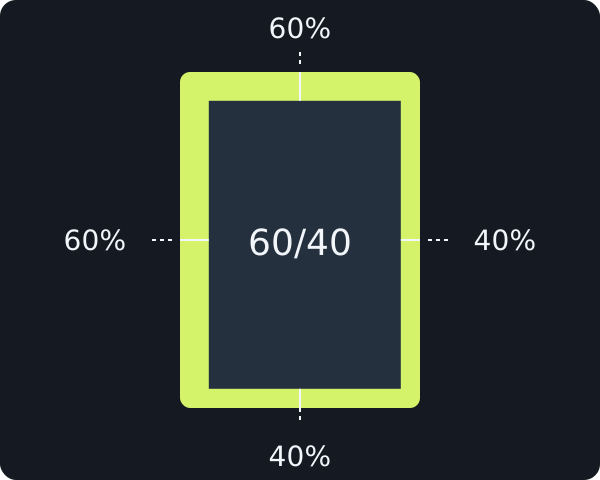
| House and grade | Status |
|---|---|
| PSA 9 MINT | official |
| BGS 8 NM-Mint | approximate |
| CGC 9 Mint | interpreted |
| SGC 9 Mint | approximate |
Bands are intentionally incomplete where numerical evidence is missing. Do not interpolate unlisted grades. Status applies to each row, not just to the house.
The shift is clearer than at 55/45. With both front axes at this ratio, the current PSA ceiling is 9 MINT, not a PSA 10 promise. Do not apply the more generous reverse threshold to this front example. Older descriptions cannot override the current PSA model.
What does 65/35 front centering look like?
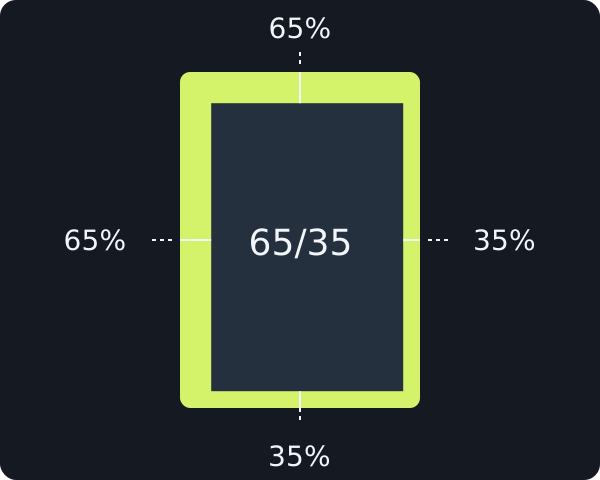
| House and grade | Status |
|---|---|
| PSA 8 NM-MT | official |
| BGS 7 Near Mint | approximate |
| CGC 8 NM-Mint | interpreted |
| SGC 8.5 NM-Mint+ | approximate |
Bands are intentionally incomplete where numerical evidence is missing. Do not interpolate unlisted grades. Status applies to each row, not just to the house.
A visibly narrower right and bottom margin does not necessarily mean the physical card is smaller. Print position and the outside cut are separate. Confirm both boundaries before measuring a card with this appearance.
What does 70/30 front centering look like?
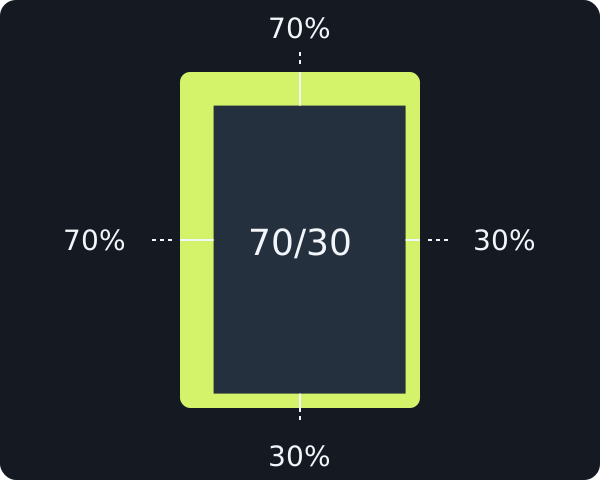
| House and grade | Status |
|---|---|
| PSA 7 NM | official |
| BGS 6 EX-Mint | approximate |
| CGC 6 EX-NM | interpreted |
| SGC 7.5 Near Mint+ | approximate |
Bands are intentionally incomplete where numerical evidence is missing. Do not interpolate unlisted grades. Status applies to each row, not just to the house.
The printed frame is displaced in both directions. A horizontal 70/30 with vertical 50/50 would be a different BGS input from this diagram. Never average a centered axis with the weaker one to improve a result.
What does 80/20 front centering look like?
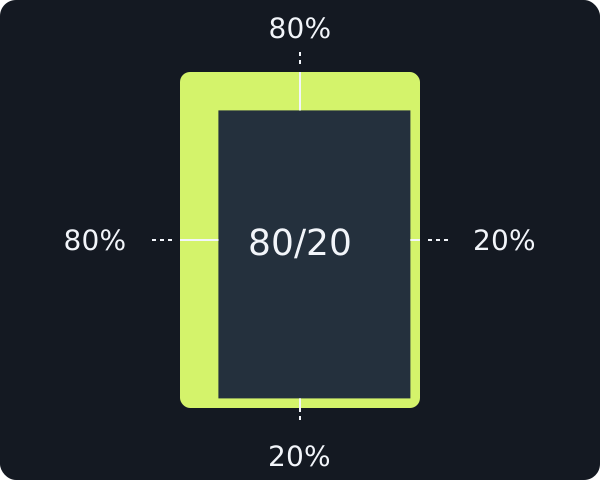
| House and grade | Status |
|---|---|
| PSA 6 EX-MT | official |
| BGS 4 VG-EX | approximate |
| CGC 4.5 VG-EX+ | interpreted |
| SGC 5 Excellent | approximate |
Bands are intentionally incomplete where numerical evidence is missing. Do not interpolate unlisted grades. Status applies to each row, not just to the house.
The narrow border remains present. If an actual frame reaches the physical edge, it is a different geometry and may require an error assessment. Do not infer a manufacturing error or authenticity from this schematic alone.
What does a 75/25 back centering example show?
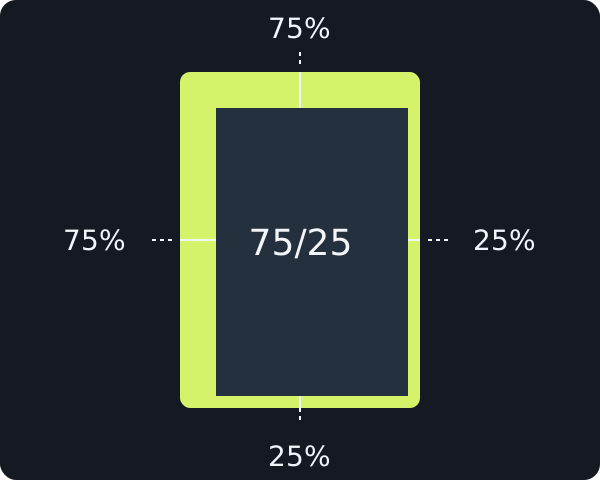
| House and grade | Status |
|---|---|
| PSA 10 GEM MT | official |
| BGS 8 NM-Mint | approximate |
| CGC 10 Gem Mint | interpreted |
| SGC — | not modelled |
Bands are intentionally incomplete where numerical evidence is missing. Do not interpolate unlisted grades. Status applies to each row, not just to the house.
These are reverse ratios. Passing a back band does not rescue a front that exceeds its own limit. Use the same underlying printed reference on both opposing edges; a central logo or picture is not automatically that reference.
What does 85/15 back centering look like?
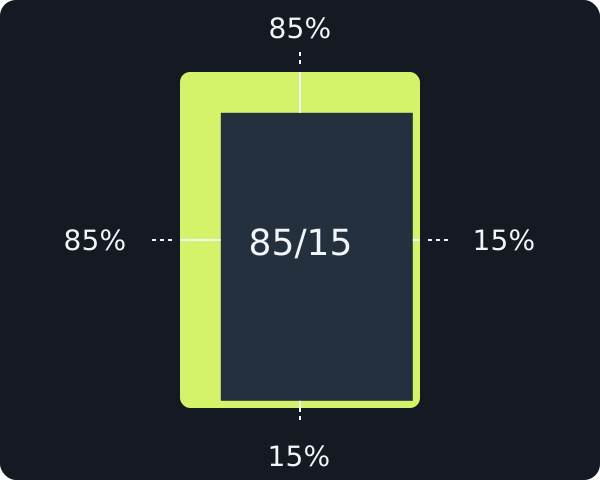
| House and grade | Status |
|---|---|
| PSA 9 MINT | official |
| BGS 7 Near Mint | approximate |
| CGC 9 Mint | interpreted |
| SGC — | not modelled |
Bands are intentionally incomplete where numerical evidence is missing. Do not interpolate unlisted grades. Status applies to each row, not just to the house.
The thin margin needs a sharp photo. A reflection or a holder lip can consume a large share of it, making line placement unreliable. Keep uncertainty and verify the true cut rather than claiming a precise ratio from a concealed edge.
What does 90/10 back centering look like?
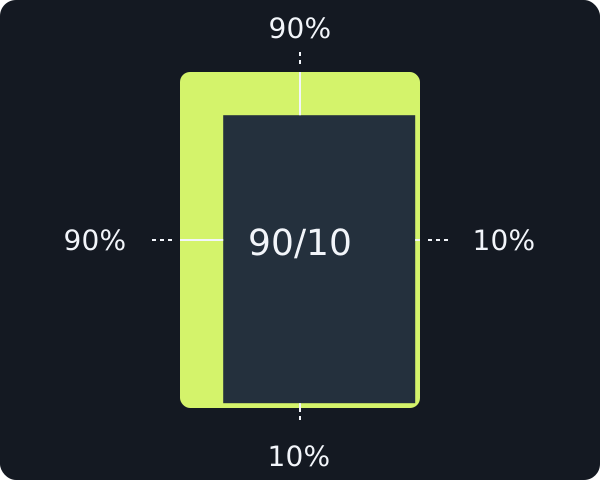
| House and grade | Status |
|---|---|
| PSA 9 MINT | official |
| BGS 7 Near Mint | approximate |
| CGC 9 Mint | interpreted |
| SGC — | not modelled |
Bands are intentionally incomplete where numerical evidence is missing. Do not interpolate unlisted grades. Status applies to each row, not just to the house.
The narrowest margin is still drawn at its actual proportion; it is not exaggerated for visibility. Do not round an unresolved sliver into a clean pass. Missing model bands, especially the SGC back, remain unknown rather than becoming unrestricted official allowances.
Frequently asked questions
What does 55/45 centering mean on a Pokémon card?
The wider border occupies 55 percent of the two opposing borders together and the narrower 45 percent. Calculate the horizontal and vertical pairs independently.
Is a 60/40 Pokémon front inside the PSA 10 centering limit?
With both axes 60/40 the model returns 9 MINT. The PSA 10 front limit is 55/45; surface and corners remain separate checks.
Why do the back diagrams show different centering ceilings?
Each house has its own modeled reverse bands. A reverse ratio does not use the front table and cannot stand in for a combined grade.
Can I compare these diagrams directly with a borderless card?
Only if that printing has a consistent measurable reference. Do not invent borders from the artwork; measure the reverse or leave the front unresolved.
Which sources and limits does this guide use?
Tables are generated from the same data source as the tool. Threshold verification: 2026-10-01. Centering standards · How it works.
- PSA: official · retrieved
- BGS: interpreted · unavailable
- CGC: interpreted · retrieved
- SGC: approximate · brief-only · secondary reference
official = published numerical rule; interpreted = model interpretation; approximate = working estimate. retrieved = source retrieved; unavailable = not accessible; brief-only = supplied reference without direct retrieval. Individual band status is shown in the standards: the house-level status does not replace each row's status.